Philippine Analyst: Flood Control Corruption Probe Must Not Stop at President's Cousin
Anna Malindog-Uy, deputy director of the Philippines' Asian Century Strategic Studies Institute, argued in a Manila Times article that the investigation into the country's flood control corruption scandal must not end with former House Speaker Martin Romualdez.
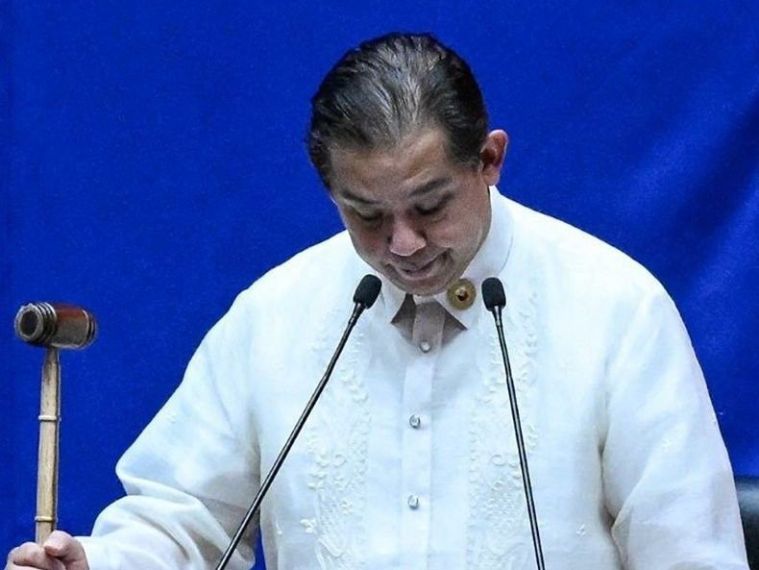
Romualdez, a first cousin of President Ferdinand Marcos Jr., served as House Speaker from 2022. After deadly floods in 2025 exposed flood control projects as "ghost projects" or shoddily built, public protests forced him to resign. He now faces plunder charges over 7.44 billion pesos (about 790 million yuan).
At the heart of Malindog-Uy's argument is a simple question: How could corruption on this scale take root in a government whose budget machinery was controlled by political allies and family members?
Family ties, accountability gaps
For Malindog-Uy, the issue is not that relatives are inherently corrupt. It is that when power circulates among relatives and loyalists, who is left to supervise — and who dares to keep investigating when the trail reaches the center of power? The Marcos administration has presented the prosecution of the president's cousin as proof that no one is above the law. But the public, she writes, is entitled to ask whether accountability will stop there.
Trust eroding faster than corruption
Citing a July Pulse Asia survey, Malindog-Uy notes that only 29% of Filipinos approve of Marcos' performance, while 51% distrust him. When citizens see massive corruption allegations alongside flooded communities and questionable infrastructure, trust does not simply dip — it collapses. Once that happens, she argues, corruption stops being merely a criminal matter and becomes a crisis of legitimacy. Roughly half of Filipinos disapprove of Marcos' performance, a figure that underscores her point.
Not the big fish, but the facilitator
Malindog-Uy argues that Romualdez may not be the biggest beneficiary of the Philippines' corruption ecosystem, but he may have been a key node where political power, budget allocations, and project funds intersected. Prosecuting a former House speaker as a scapegoat cannot resolve the problems the flood control scandal has exposed, she writes — nor does prosecuting the president's cousin prove the president's innocence. Going after the "facilitator," she argues, should be the start of tracing the network, not the end of the investigation.
The article closes with Confucius: leadership is not about holding power, but about being worthy of it. If Romualdez was indeed at the center, Malindog-Uy writes, then it must be made clear for whom he operated, with whom, and who ultimately benefited. If the money trail leads higher, political convenience must not become a ceiling that blocks the investigation. For Marcos, she concludes, the question is no longer philosophical: the numbers suggest more and more Filipinos are doubting him and his government, and his legitimacy is eroding.