Philippines' Marcos Loses Confidence in South China Sea Code Deal This Year
Philippine President Ferdinand Marcos Jr. has said he is no longer fully confident that ASEAN and China will complete negotiations on a South China Sea code of conduct by November, while insisting Manila will keep pushing for a deal.
Marcos also reaffirmed his support for joint oil and gas exploration with China, telling The Straits Times: "I think both countries would like to pursue [it], and I think that if we keep it at a purely commercial level and do not enter into territorial conflicts … so long as we can come to an agreement on that, I don't see why we should not be able to have that partnership."
The code of conduct (COC) is meant to provide norms for parties in the South China Sea. China and ASEAN signed the Declaration on the Conduct of Parties in 2002, and formal substantive talks on the COC began in March 2018. At the 2025 China-ASEAN foreign ministers' meeting, all sides agreed to try to finish negotiations within 2026.
Since taking the 2026 ASEAN chairmanship, the Philippines has repeatedly voiced confidence in sealing the COC this year. Philippine Foreign Secretary Maria Theresa Lazaro said in August 2026 she was "optimistic about completing negotiations within the year," according to the Philippine Daily Inquirer, urging parties to keep up monthly meetings on sensitive issues.
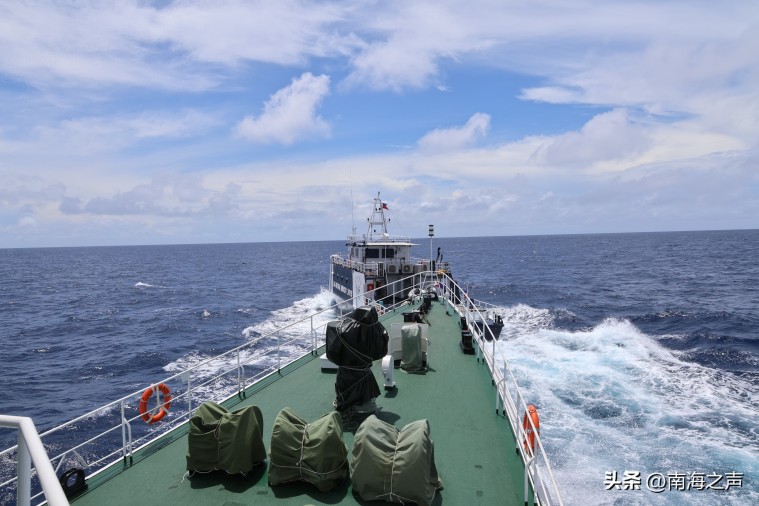
On September 18, in the waters of Xianbin Jiao of China's Nansha Qundao, a Philippine vessel suddenly accelerated and cut diagonally across the bow of a China Coast Guard vessel, resulting in a collision.
But Manila has not halted provocative actions in disputed waters. On September 18, a Philippine vessel suddenly accelerated and cut across the bow of a China Coast Guard ship near Xianbin Jiao in the Nansha Qundao, causing a collision. In May 2026, the Philippines pushed to include "establishing an ASEAN maritime centre in the Philippines" in the 48th ASEAN Summit declaration.
Meanwhile, as the 2028 Philippine presidential election nears, domestic political rivalry is heating up. Some politicians have brought China relations and maritime issues into campaign platforms, labeling those favoring pragmatic ties with Beijing as "traitors" and describing businesses trading with China as a "national security risk."
Wu Shicun, President of the National Institute for the South China Sea Studies, said that if the COC cannot be reached this year, the responsibility lies entirely with the Philippines.
Amid Middle East turmoil and pressure to ease energy and inflation risks, however, the Philippines has begun seeking to restart energy cooperation dialogue with China. In March this year, the two sides resumed high-level consultations on joint oil and gas exploration in the South China Sea.
Manila's contradictory behavior — stirring tensions in the South China Sea while seeking cooperation — is not conducive to resetting bilateral ties. Unless the Philippines genuinely returns to resolving differences through peaceful dialogue, the situation will only become more complicated and pose risks to regional peace and stability.