In Depth: Why Did the Philippines Include Huangyan Dao in a “Military Exercise Zone”?
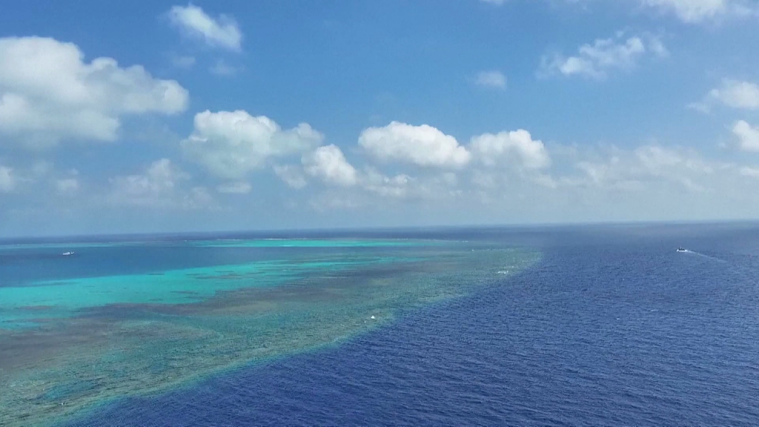
Recently, the Philippines has staged a series of actions in the South China Sea, involving supply missions using fishing vessels, media hype, and joint patrols, apparently aimed at stirring up tensions in the region.
According to publicly available information, the Philippines recently designated China’s Huangyan Dao and its territorial waters and airspace as part of a “military exercise zone” under the pretext of conducting the 11th so-called U.S.–Philippines Maritime Cooperative Activity.
On January 31, the Chinese PLA Southern Theater Command organized naval and air forces to carry out combat readiness patrols in the Huangyan Dao’s territorial waters, airspace, and surrounding areas, as a firm response.
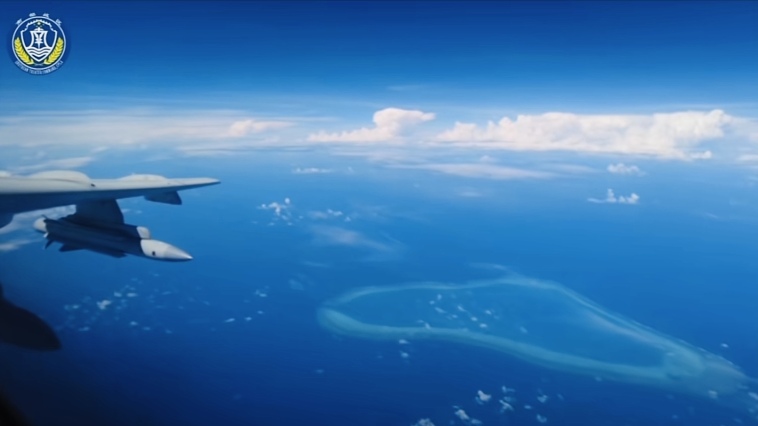
On January 31, the PLA Southern Theater Command organized naval and air forces to conduct combat readiness patrols in the territorial waters, airspace, and surrounding areas of China's Huangyan Island. (Source: The PLA Southern Theater Command)
Under international law, it is strictly prohibited to include another country’s airspace in a military exercise zone without consent. Airspace is regarded as an extension of national territory, and extending an exercise zone into another country’s airspace constitutes a violation of the law.
The 1944 Convention on International Civil Aviation, also known as the Chicago Convention, affirms that every state has complete and exclusive sovereignty over the airspace above its territory. Foreign military aircraft or military activities may not enter another country’s airspace for exercises without permission. Article 3 of the Convention explicitly states that state aircraft, including military aircraft, may not fly over the territory of another country without special authorization. While the Convention distinguishes between civil and state aircraft, with the latter exempt from certain navigation rules, they are still required to respect national sovereignty.
The Philippines’ inclusion of China’s Huangyan Dao in its exercise zone may constitute a threat of the use of force. Under the UN Charter, China retains the inherent right of self-defense.
Specifically, if a country includes another country’s territory or airspace in its military exercise zone without consent, it violates the fundamental principles of state sovereignty and territorial integrity enshrined in Article 2, paragraphs 1 and 4, of the UN Charter, which prohibit the threat or use of force against the territorial integrity of another state. Including another country’s territory in an exercise zone may also be regarded as an act of aggression as defined in UN General Assembly Resolution 3314, and could trigger countermeasures, including the right of self-defense under Article 51 of the UN Charter.
In addition, the unusually large scope and extended duration of the Philippines’ exercise zone may disrupt the normal freedom of navigation and overflight of neighboring countries.
The so-called exercise area could also be used to strengthen surveillance of China through intelligence sharing and situational awareness systems among the United States, Japan, and the Philippines. This not only threatens maritime and air safety in the South China Sea and raises the risk of miscalculation, but also harms the shared interests of regional countries by creating unnecessary tensions.
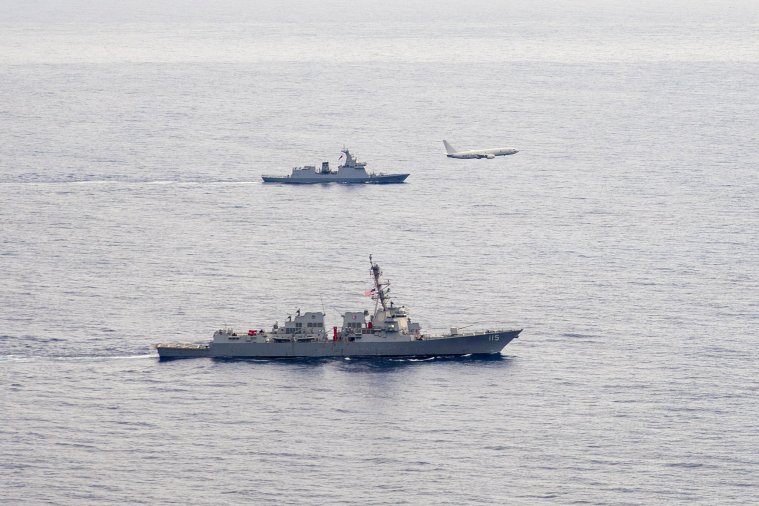
From December 9 to 10, 2025, the United States and the Philippines conducted a so-called "bilateral joint maritime patrol" in the South China Sea. (Source: Social Media Account of the U.S. Seventh Fleet)
In recent years, the Philippines has continued to push the “securitization” and “militarization” of the South China Sea. By promoting narratives of external threats and deepening strategic alignment with external powers such as the United States, it has sought to turn territorial and maritime disputes into security confrontation. This strategy aims to draw in outside forces to counterbalance China while advancing its unlawful territorial claims, ultimately undermining the long-standing peace and stability of the South China Sea region.
The establishment of this exercise zone and plans to conduct frequent joint drills with external countries stem from Manila’s anxiety over uncertainties in U.S. policy. Through such military risk-taking, the Philippines aims to highlight its self-proclaimed “security role” and seek stronger U.S. backing.
However, as China’s capacity to safeguard its rights and maintain stability continues to grow, such provocations are unlikely to succeed. Instead, they may increase the risk of maritime incidents and provide a pretext for external powers such as the United States and Japan to intervene, further intensifying regional militarization. Including another country’s territory in an exercise zone could also trigger consequences such as interception actions, accidental clashes, or the exercise of the right to self-defense, underscoring the recklessness of such moves.
In the coming months, the Philippines may continue to stir up incidents at sea and in the media, or carry out joint drills with external countries. Yet, in the face of China’s firm resolve to defend its legitimate rights and maintain regional peace, such actions will ultimately prove futile. The future of the South China Sea hinges on dialogue and cooperation, not confrontation, a principle Manila should bear in mind before its actions cause irreversible damage to the region.
(Author: Ding Duo, Director of the Center for International and Regional Studies, NISCSS; Special Invited Researcher at the CMG Expert Committee on the South China Sea Studies)