Scripted Tensions: The Calculations Behind Philippines' Infringements in the South China Sea
On December 11, Philippine President Ferdinand Marcos Jr., during a meeting with China’s newly appointed Ambassador to the Philippines, Jing Quan, stated that China is one of the Philippines’ most important friends and partners. He emphasized that differences should be the exception rather than the norm in Philippines–China relations, and expressed hope that both sides would work together to manage differences and strengthen cooperation.
However, on the very same day, the Philippines organized multiple fishing vessels to head toward waters near China’s Huangyan Dao, using “fishing” as a pretext to seek opportunities for infringing activities. Around the same time, several small aircraft were dispatched to illegally intrude into the airspace over China’s Huangyan Dao, carrying Philippine media personnel to film the operation.
On December 12, multiple batches of Philippine vessels once again flew the banner of “fishing” and, despite repeated warnings and dissuasion by the China Coast Guard, insisted on sailing to the waters near Xianbin Jiao in China’s Nansha Qundao to stir up trouble and provoke incidents.
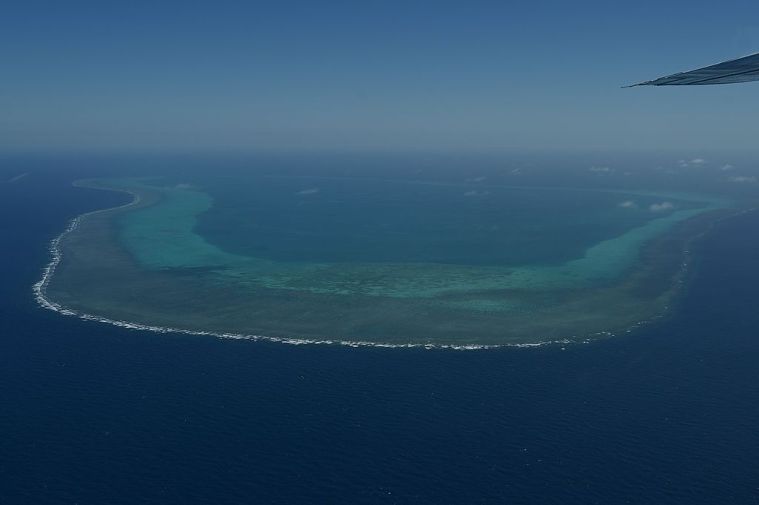
(The territorial waters and surrounding areas of China's Huangyan Dao. /File Photo)
Much like the predictable finale of the Philippines’ repeated farcical “incursions” in the South China Sea in recent years, these coordinated acts of infringement across multiple locations were all handled by the Chinese side in accordance with the law and firmly repelled. Yet the media hype campaign that followed has made one thing clear: the Philippines is staging a carefully choreographed “reality show,” turning regional security into a spectacle-oriented gamble. In doing so, it lays bare Manila’s calculated hypocrisy and ulterior motives when it comes to claiming a “peaceful” approach to resolving the South China Sea issue.
A closer look at the Philippines’ latest provocations makes it hard to miss how precisely they are unfolding—almost as if they were scripted.
First is the timing. These incursions closely followed the so-called U.S.–Philippines “bilateral Maritime Cooperative Activity (MCA),” and on the very day of the Huangyan Dao incident, Manila issued a statement reaffirming its “increasingly solid alliance” with Washington and their claimed “shared commitment” to maritime security and freedom of navigation.
Such haste in brandishing the U.S.–Philippines alliance only exposes Manila’s underlying insecurity and anxiety. By echoing the Trump administration’s 2025 National Security Strategy and its focus on the South China Sea, the Philippines appears intent on manufacturing tensions to showcase its “allied value,” for fear of being marginalized in Washington’s strategic calculus.
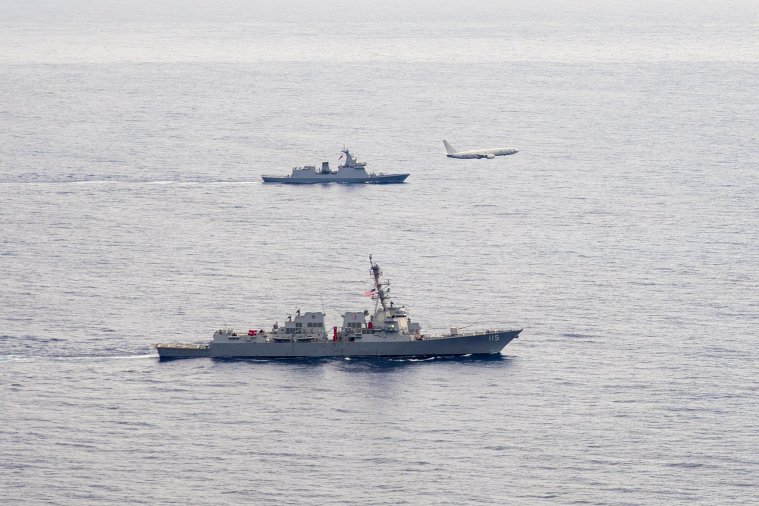
(From December 9 to 10, 2025, the United States and the Philippines conducted so-called “bilateral Maritime Cooperative Activity” in the South China Sea. /U.S. Seventh Fleet social media account)
Second comes the distortion of narrative. In the so-called “live coverage” aired by Philippine media and the staged remote exchanges with Philippine Coast Guard spokesperson Tarriela, the Philippine side simultaneously hyped its “successful delivery” of relief supplies to fishermen near Huangyan Dao while smearing the Chinese Coast Guard’s lawful enforcement actions as “disrupting fishermen’s livelihoods,” casting itself as a “small but brave” actor standing up to “great-power hegemony” in the South China Sea.
The seamless coordination between media coverage and infringement operations leaves little doubt that the episode was premeditated and scripted. By packaging a carefully orchestrated maritime provocation as a media spectacle, the Philippines is not only blatantly distorting the fact that it infringed upon China’s sovereignty, but also deliberately manipulating international opinion and cynically misleading global perceptions.
Third comes the deliberate attempt to add drama. On the 11th, the Armed Forces of the Philippines claimed it was “closely monitoring” the regional situation, particularly the potential impact of hypothetical China–Japan tensions on Philippine security. Philippine Navy Rear Admiral Trinidad went further, stating that the Philippines is part of the first island chain, and any developments involving Taiwan and Japan could have a direct impact, while expressing “concern” over the normal operations of Chinese vessels in relevant waters. At a time when the international community has been openly criticizing the Japanese prime minister’s improper remarks on the Taiwan question, the Philippines has instead chosen to drag in unrelated issues and force itself into the spotlight. Cloaked as grave concern for regional security, this posture in fact reveals a troubling eagerness to stir trouble and profit from instability.
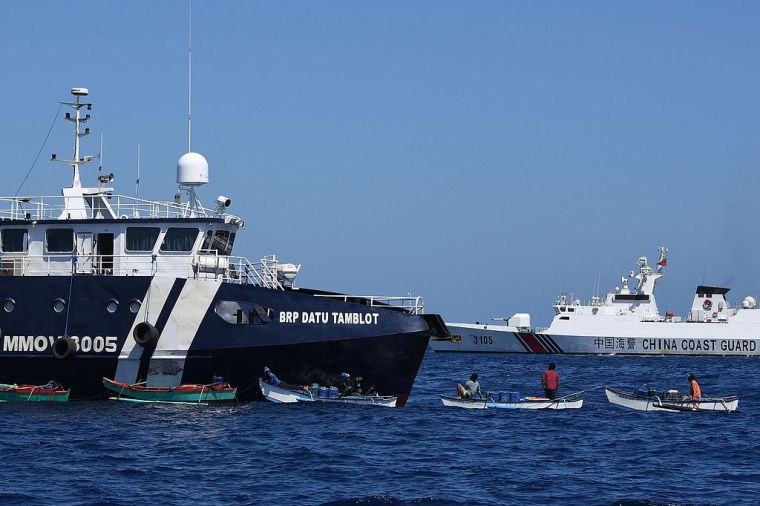
(On February 15, 2024, a Philippine government vessel illegally intruded into waters adjacent to China’s Huangyan Dao, and was lawfully regulated and driven away by the Chinese Coast Guard.)
Since the Marcos administration took office, the Philippines has persistently sought to “activate” the applicability of the U.S.–Philippines Mutual Defense Treaty through high-frequency air and maritime provocations, while attempting to entrench the illegal South China Sea arbitration ruling through domestic legislation such as the so-called “Maritime Zones Act.”
There is no doubt that these actions infringe upon China’s territorial sovereignty and maritime rights and interests, violate international law—including the United Nations Convention on the Law of the Sea—and run counter to the commitment to restraint enshrined in the “Declaration on the Conduct of Parties in the South China Sea (DOC).” They also stand in direct opposition to the shared consensus among regional countries to uphold peace and stability in the South China Sea.
The Philippines should be under no illusion that provocations at sea, in whatever form, will yield it any advantage vis-à-vis China, still less shake China’s firm resolve to safeguard its territorial sovereignty and maritime rights and interests in accordance with the law. The repeated staging of “reality shows” or pre-scripted dramas merely exposes to the international community the Philippines’ undiminished ambition to encroach upon South China Sea features and its persistent intent to internationalize the issue.
The international community should recognize that, in the face of Manila’s aggressive and unreasonable provocations, China has consistently acted as a responsible major country, exercising professionalism and restraint, enforcing control in accordance with both international and domestic law, and preventing escalation. This fact-based, law-governed, and peace-oriented approach stands in stark contrast to the Philippines’ media-driven acts of infringement.
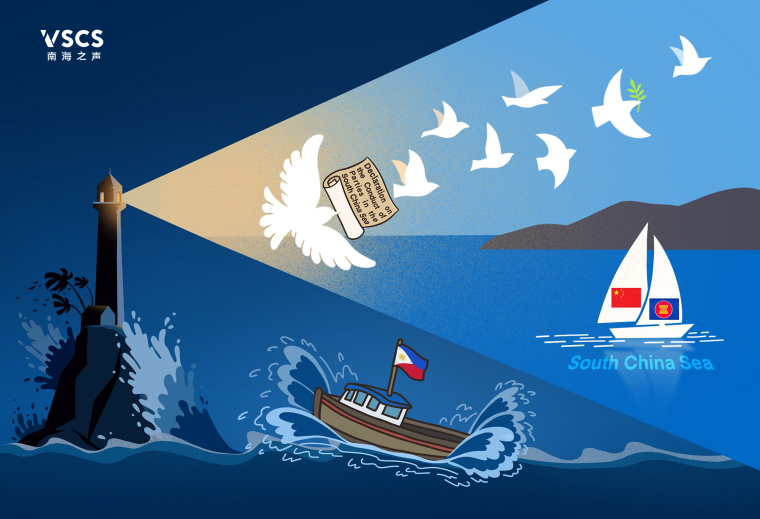
(In comics: Discord and Peace)
At present, the Philippines claims on the one hand that it seeks to manage differences with China, yet on the other continues to manufacture new incidents. This inconsistency between words and deeds, marked by repeated reversals, has seriously eroded the basic trust of regional countries and undermined the positive momentum of the ongoing consultations of Code of Conduct in the South China Sea (COC).
As the Chinese government has repeatedly made clear, the Philippines should cease all acts of infringement and provocation, as well as the accompanying media hype, and return to the proper track of addressing differences through bilateral dialogue. China has never been sparing in its goodwill toward friends, but it will not shy away from defending itself when confronted with hostility.
Only by setting aside its scripts of performance and engaging in dialogue with genuine sincerity can the Philippines truly safeguard regional peace and stability—and ultimately serve the long-term interests of the Philippine people.