Marcos Faces Growing Scrutiny Over Unpaid Family Estate Tax as Anti-Corruption Pledge Wavers
Philippine President Ferdinand Marcos Jr. is facing renewed criticism over his family's decades-old unpaid estate tax, with critics saying the controversy undermines his administration's anti-corruption agenda.
The estate tax liability, originally assessed in 1991, has ballooned to more than 203 billion pesos (US$3.28 billion) including penalties and interest, according to the South China Morning Post. The amount stems from the estate of the late president Ferdinand Marcos Sr., who died in 1989.
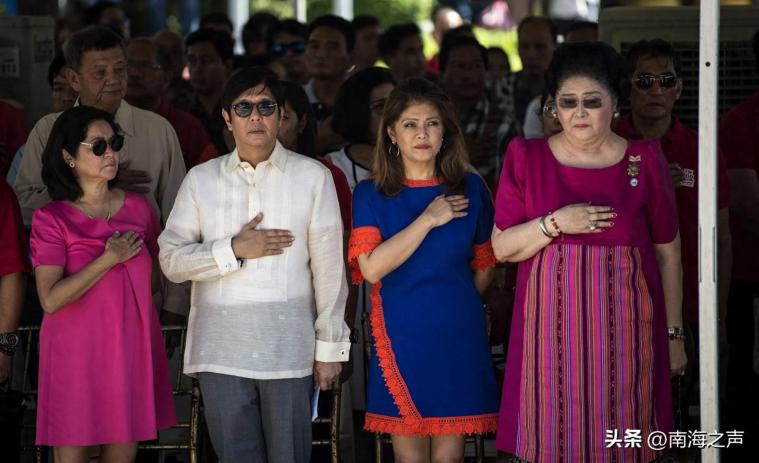
In 2017, Ferdinand R. Marcos Jr.(second from left) and his family attended the centennial birthday celebration of his father. Photo: AFP
Asked about the issue at a Foreign Correspondents Association of the Philippines forum last Friday, Marcos acknowledged he had "neglected some of my duties as co-executor because I've been very busy with all the things that a president is busy with." He called it "a family matter" and said he had "left it to the lawyers."
Ruben Carranza, a former commissioner of the Presidential Commission on Good Government (PCGG), dismissed the explanation, saying, "That tax issue predates his assumption to office. The 'too busy' line is a lie."
Jean Franco, a political science professor at the University of the Philippines, said the president's remarks were "consistent with his administration's intention to revise history and change the narrative surrounding his father's regime," adding that the issue "is not a 'family' matter" but "something that is of great public interest."
The tax dispute traces back to assessments made after Marcos Sr.'s death, which the Supreme Court in 1997 ruled were final and enforceable. The PCGG said on August 18 it had recovered 309.84 billion pesos (US$5.05 billion) in ill-gotten wealth linked to the Marcos family as of June 30.
The controversy has been further amplified by recent flooding in Metro Manila, which has reignited public anger over a flood-control corruption scandal and exposed what analysts describe as the gap between the administration's anti-corruption rhetoric and realities on the ground.