How the Asian Coast Guard Heads Meeting Embodies the Global Leadership of China's Ecological Civilization Concept
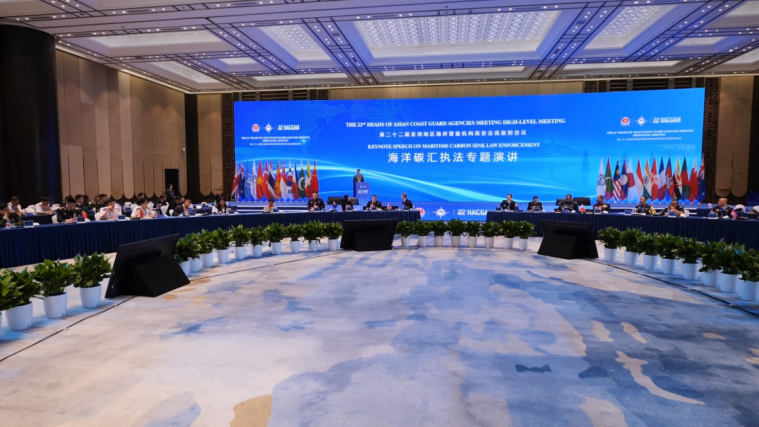
The 22nd Heads of Asian Coast Guard Agencies Meeting High-Level Meeting was recently held in Hangzhou, Zhejiang province. Participants held in-depth discussions on two major themes: implementing the Global Security Initiative and marine carbon sink law enforcement. They also adopted the Joint Statement of the 22nd Heads of Asian Coast Guard Agencies Meeting. What issues did this pan-Asia-Pacific multilateral conference, hosted for the first time by the China Coast Guard, mainly focus on? And what practical significance does it have?
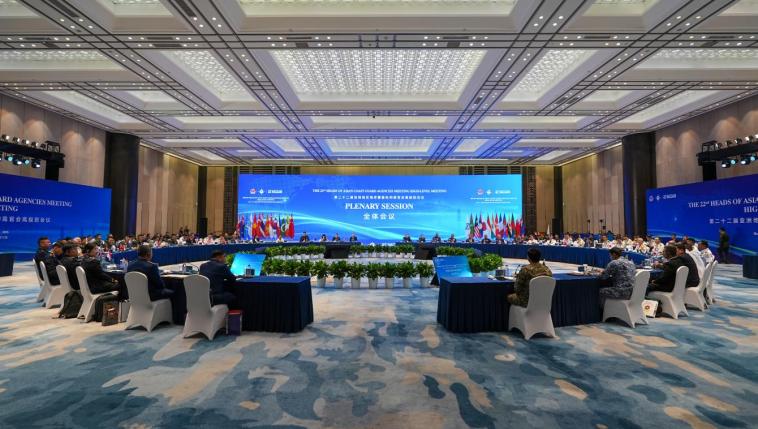
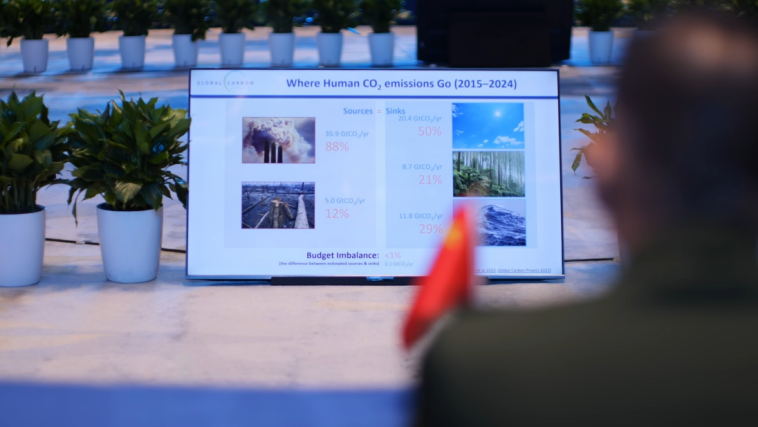
Why were two topics — marine carbon sink law enforcement and implementing the Global Security Initiative — discussed together? An important perspective is that this represents a vivid practice of China's ecological civilization concept in the field of maritime law enforcement, and in particular offers intellectual leadership for international cooperation in ocean governance.
Carbon sinks serve green development and sustainable development, and are therefore a development issue; the Global Security Initiative is an overarching concept in the security field, and is therefore a security issue. The fact that the two were discussed at the same meeting and written into the same joint statement shows that maritime law enforcement governance is not only a matter of security, but in essence also a means of safeguarding economic and social development. The practice of international ocean governance that China is leading demonstrates that maritime law enforcement agencies are further integrating into the broader national development agenda and serving broader, more consequential responsibilities — such as the sustainable development of the marine economy and the building of a maritime community with a shared future for mankind.
Development is the foundation of security, and security is the safeguard of development. It is rare for such a profound logic of governance to be so clearly embodied at an international multilateral meeting composed mainly of maritime law enforcement agencies.
The following three points illustrate how China's security outlook and development philosophy are vividly interpreted in international multilateral practice.
First, the leadership of China's security outlook
The common, comprehensive, cooperative, and sustainable security outlook advocated by the Global Security Initiative is clearly reflected at this meeting.
Maritime security has never been security enjoyed by one country alone, and no unilateral approach can deliver it. The security of the Malacca Strait passage, the fight against cross-border organized crime, and search and rescue in sudden maritime accidents — each requires coordinated responses from the countries concerned. The successful holding of this meeting has played a positive role in advancing common maritime security.
The inclusion of marine carbon sink law enforcement as a special topic at this meeting reflects that, under China's leadership, a broader range of security issues is being formally placed on the multilateral agenda of maritime law enforcement agencies.
Second, the leadership of China's development philosophy
The ultimate purpose of law enforcement governance is to safeguard economic and social development. The theme of marine carbon sink law enforcement at this meeting is a true reflection of China's new development philosophy — innovation, coordination, green, openness, and sharing — and a valuable exploration of it in practice. In particular, with regard to green development, marine carbon sink law enforcement directly reflects how China's ecological governance philosophy extends into the field of maritime law enforcement. By proposing marine carbon sink law enforcement as a special topic and writing it into the joint statement, the meeting successfully introduced China's development philosophy and ecological governance thinking into regional multilateral cooperation, enabling maritime law enforcement agencies of various countries, while combating crime and maintaining order, to take an active interest in and jointly shoulder the responsibility of safeguarding green development and protecting blue carbon ecosystems.
Third, conceptual innovation is the most important international public good
The maritime law enforcement agencies of major countries naturally cannot be satisfied merely with maintaining order in their own jurisdictional waters; they also need to provide public goods for the region. The Joint Statement's recognition of the concept of marine carbon sink law enforcement and related active practices introduced by the China Coast Guard means that a concept first proposed by China and rooted in Chinese governance discourse has, with the joint endorsement of 23 countries and regions and two international organizations, formally entered the consensus text of regional multilateral cooperation. This shows that the public goods China offers internationally have evolved from physical platforms and operational cooperation to the higher dimension of conceptual innovation and intellectual leadership. China's governance concepts are becoming public goods that the international community recognizes, adopts, writes into formal documents, and implements in governance.

It can thus be seen that this meeting is not merely a multilateral event hosted by a coast guard agency. What it ultimately leaves behind is not only a workable cooperation mechanism, but also an innovative practice in which China's governance philosophy of coordinating development and security shapes international cooperation — a vivid interpretation of China's security outlook and development philosophy in international multilateral practice.
(Author: Yang Xiao, Institute of Peace and Development, Chinese Academy of Social Sciences. His research focuses on international strategy, biosecurity, and ocean governance.)