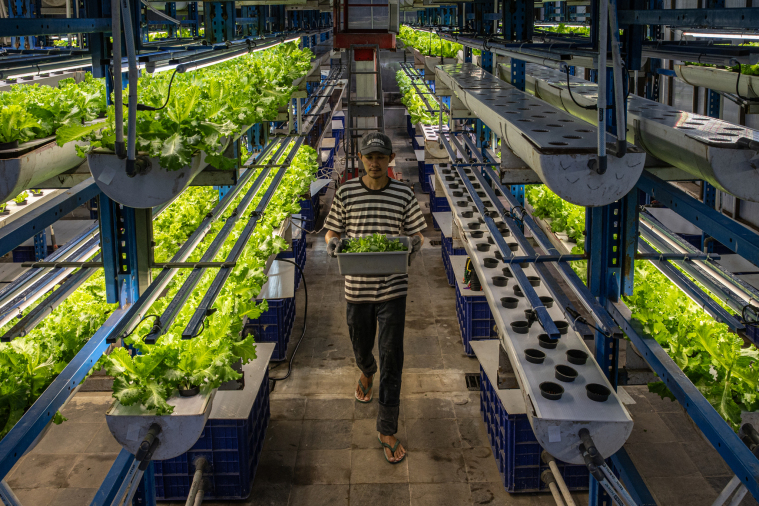
A worker harvesting Italian basil on the farm
Inside a vertical farm in South Jakarta, Indonesia, a worker shows freshly harvested Italian basil. Rising 18 meters high, this hydroponic facility is known as the tallest vertical farm in the country. Rows of LED lights line the stacked shelves, while humidity, nutrient solution, and temperature are precisely controlled by automated systems.
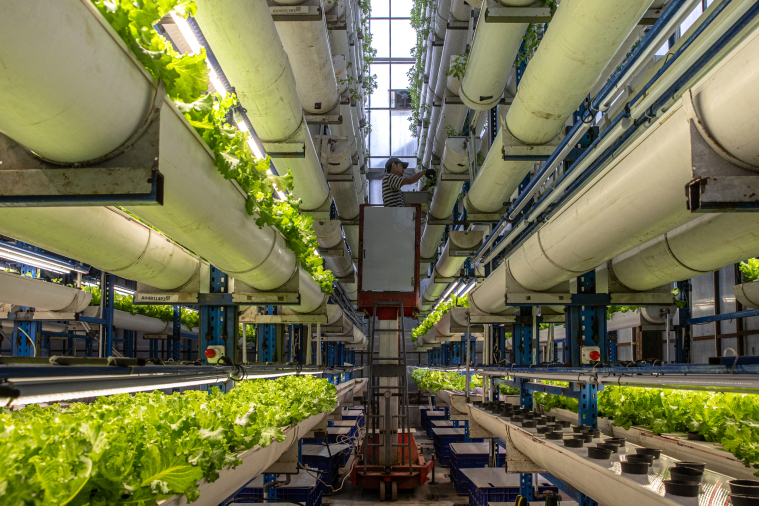
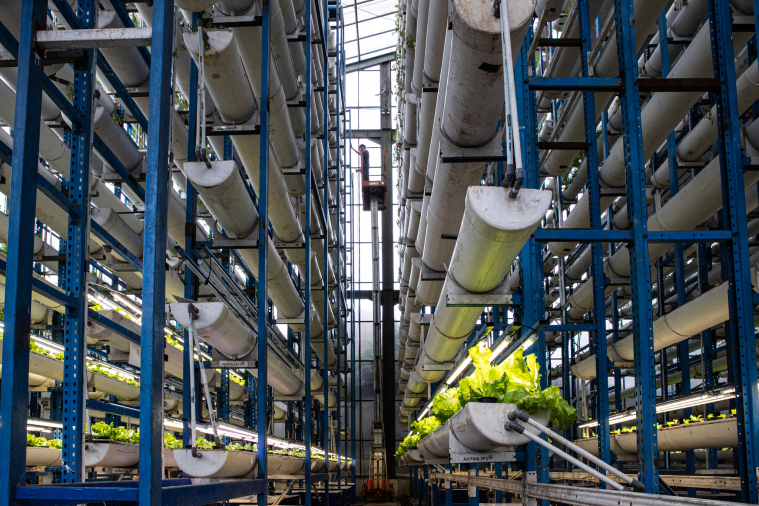
Inside the vertical farm
Vertical farming is valued for sharply reducing land and water use and eliminating the need for pesticides. It enables stable, year-round production and offers new possibilities for urban food supply. The farm currently grows about 33,000 plants, including lettuce, Thai basil, Italian basil, mint, and shiso, with a monthly output of up to two tons. The produce supplies hotels, supermarkets, and restaurants across Jakarta, and is also sold directly to the public with delivery services available.

Exterior of the vertical farm
In recent years, urban agriculture has continued to expand in Indonesia. Alongside large-scale vertical farms, microgreen cultivation is also growing rapidly. As urbanization accelerates and pressure on land and food supply intensifies, vertical agriculture is gaining attention in densely populated cities like Jakarta. From automated control systems to flexible distribution models, these farms offer an important glimpse into the future of urban farming in Indonesia.
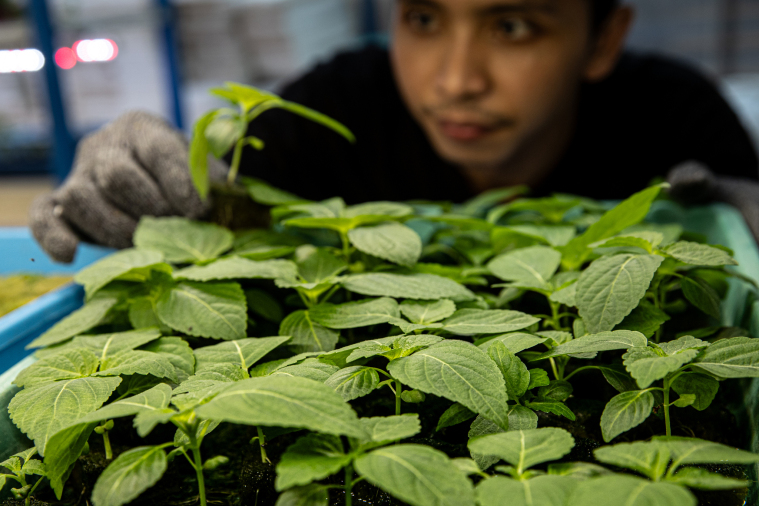
A worker inspecting sprouting shiso plants
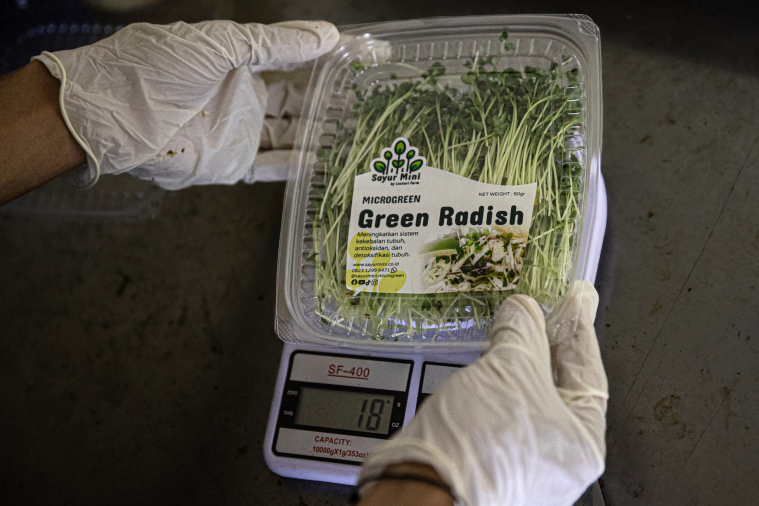
A worker weighing freshly harvested vegetables