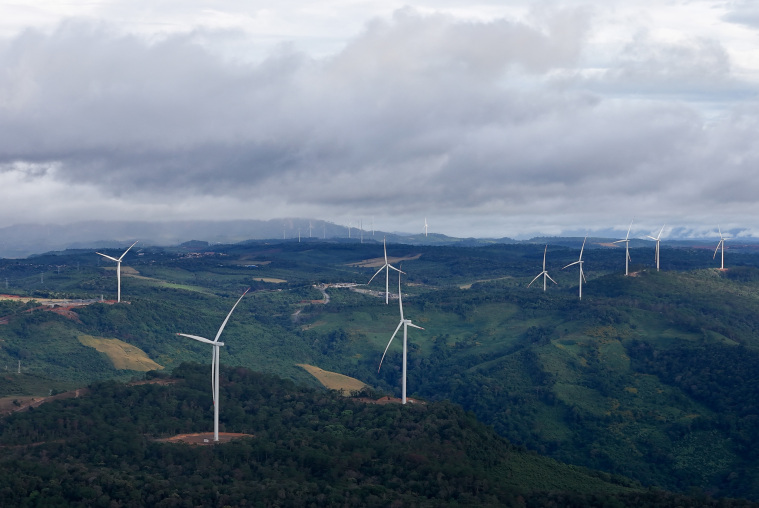
(133 giant wind turbines stand along the ridgelines amid the mountains of southern Laos.)
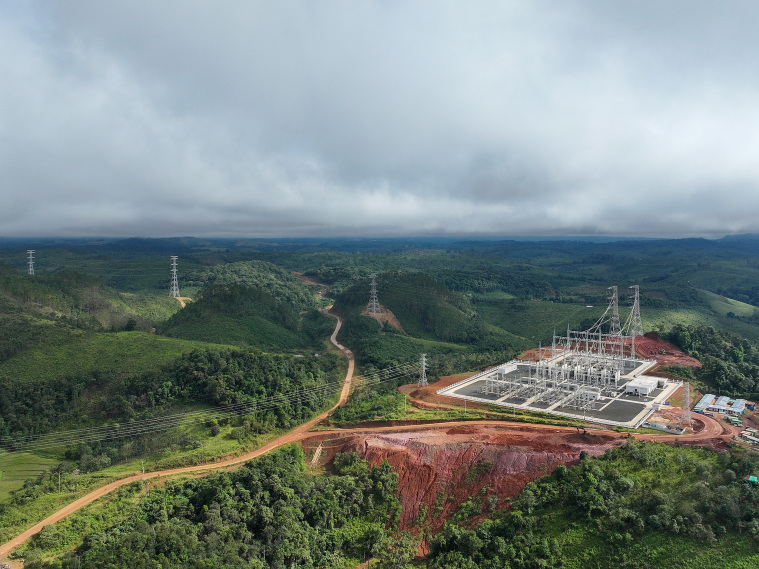
(A wind power station built among the mountains.)
In the misty mountains of southern Laos, rows of white wind turbines stretch along the ridgelines. A total of 133 giant turbines rise amid rolling peaks, their blades, each over 80 meters long, slowly slicing through the clouds and continuously delivering clean electricity to Southeast Asia. Known as a “green symphony on the ridges,” this wind farm is Laos’s first-ever wind power project, the 600MW Monsoon Wind Power Project. It is not only the largest single wind farm in Southeast Asia, but also Asia’s first new energy project to transmit electricity across national borders.

(Technicians inspect equipment inside a wind turbine.)
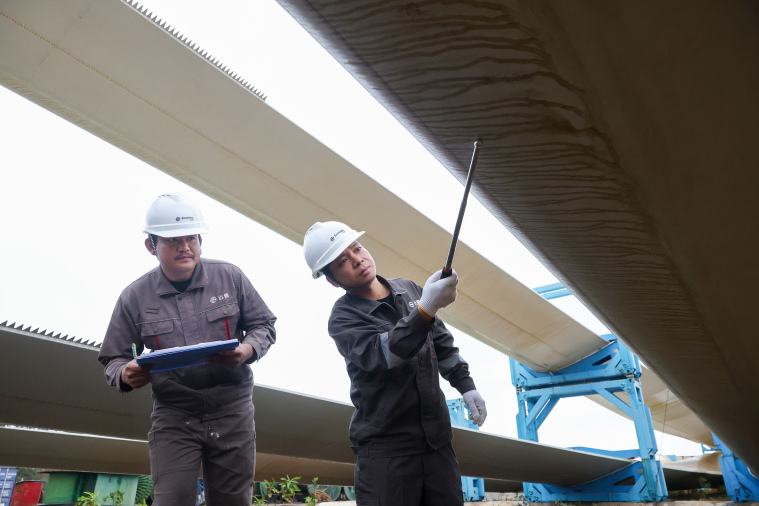
(Chinese engineers inspect turbine blades together with Lao technicians.)
As Laos’s first wind farm, the project was jointly built by teams including PowerChina and Envision Energy. Confronted with complex terrain and geology, biodiversity protection requirements, long-distance transportation, construction during the rainy season, and cross-border grid connection, builders tackled challenges one by one over more than two years, turning an “extreme worksite” into a “green power hub” and ending Laos’s history without wind power.
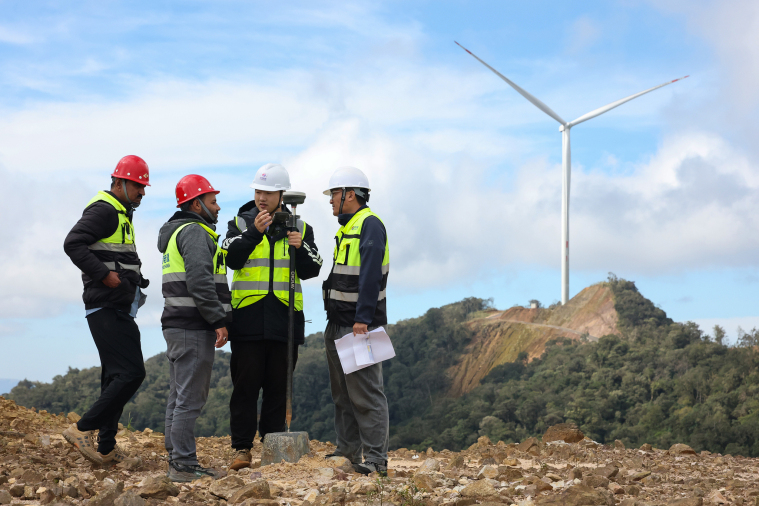
(PowerChina engineers exchange technical expertise with foreign engineers.)
According to project estimates, the wind farm can generate about 1.72 billion kilowatt-hours of electricity annually. Through cross-border transmission lines spanning more than 100 kilometers, the power is sent directly from Laos to the central Vietnam grid, meeting local demand while supporting regional green energy interconnection.
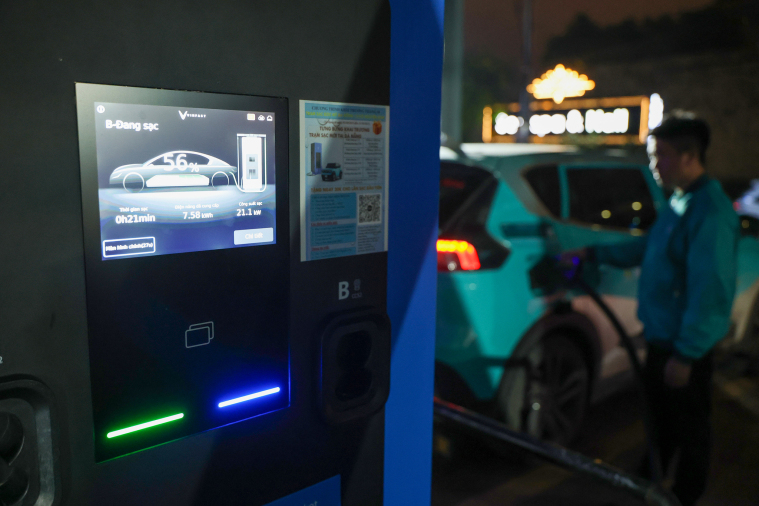
(A Vietnamese taxi driver charges an electric vehicle at a charging station.)
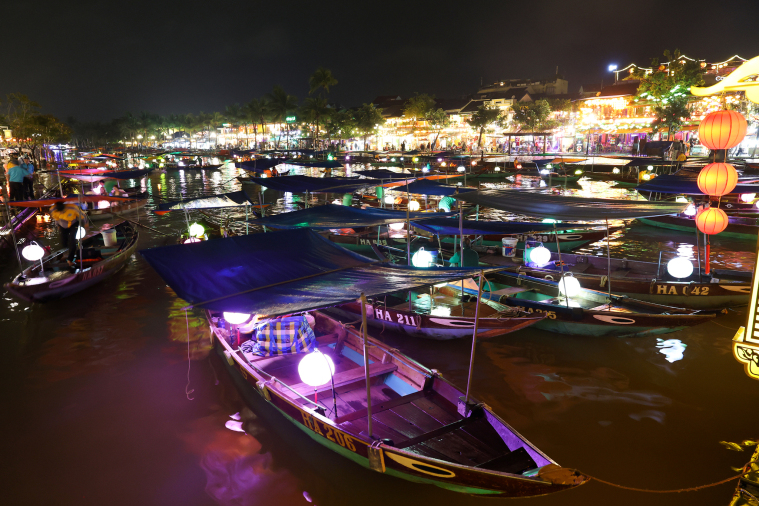
(The wind power project supplies green electricity to cities in central Vietnam.)
Laos has long relied on hydropower and is often called the “battery of Southeast Asia,” but wind power had remained absent until now. The completion of this project marks a leap from “no wind” to “wind power,” providing a critical pillar for the country’s energy transition.