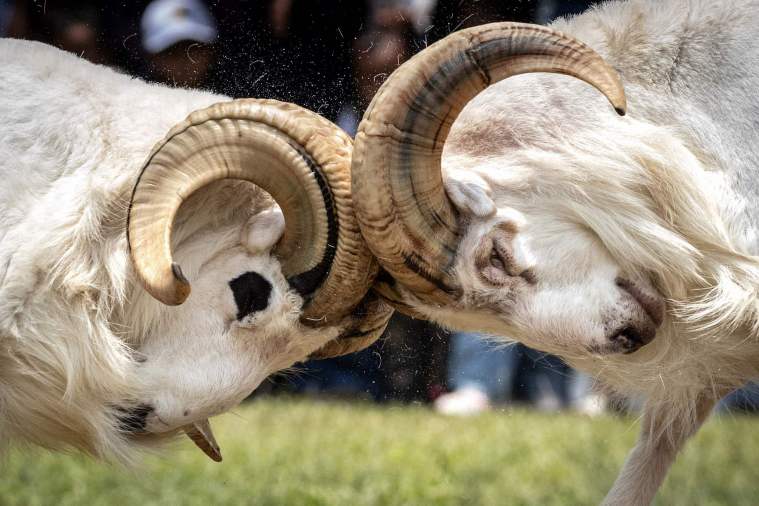
In Rancabango Village, Garut Regency of West Java, Indonesia, the morning mist has barely lifted when the open ground at the center of the village is already packed with onlookers. One by one, contestants lead out their prized rams. As drums begin to beat, two animals step into the ring, raise their heads, size each other up, and then clash head-on, marking the start of a ram fight rooted in centuries-old tradition.
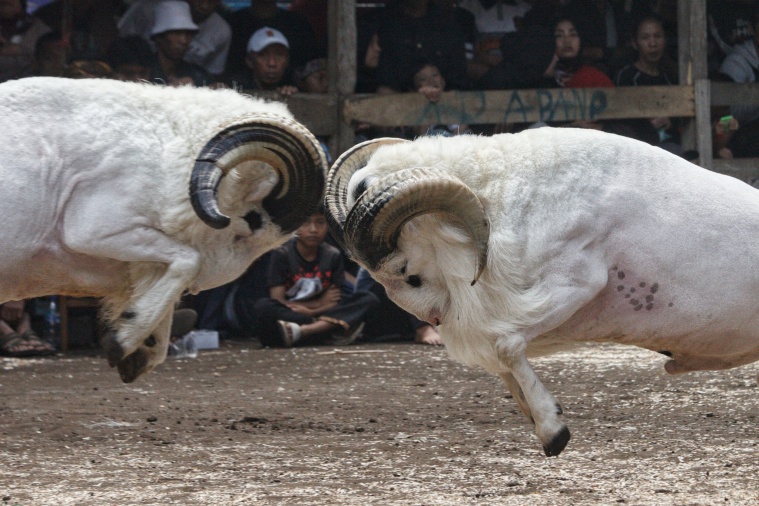
(At the competition site)
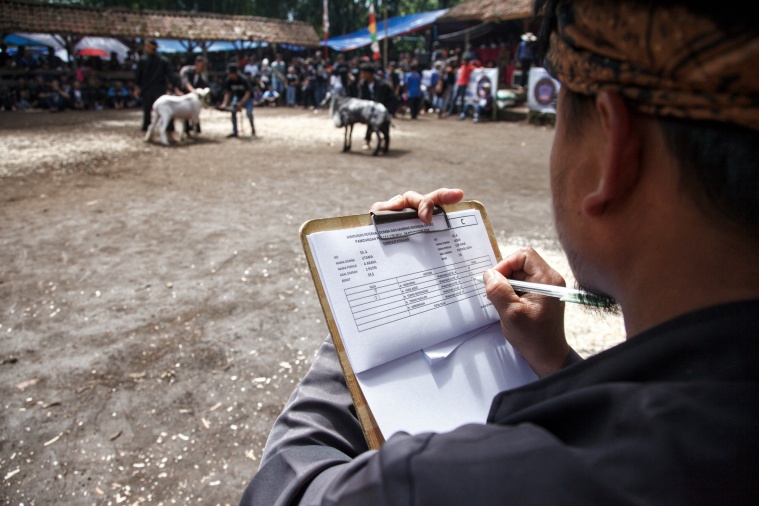
(Judges recording scores for the competing rams)
Known as the Garut traditional ram fight, the practice dates back to the Pajajaran Kingdom around 1815. For more than two centuries, its rules have remained largely unchanged. Each bout allows no more than 20 head-butts to prevent fatal injury. Judges determine the winner based on the ram’s health, posture, endurance, fighting skill, and courage.
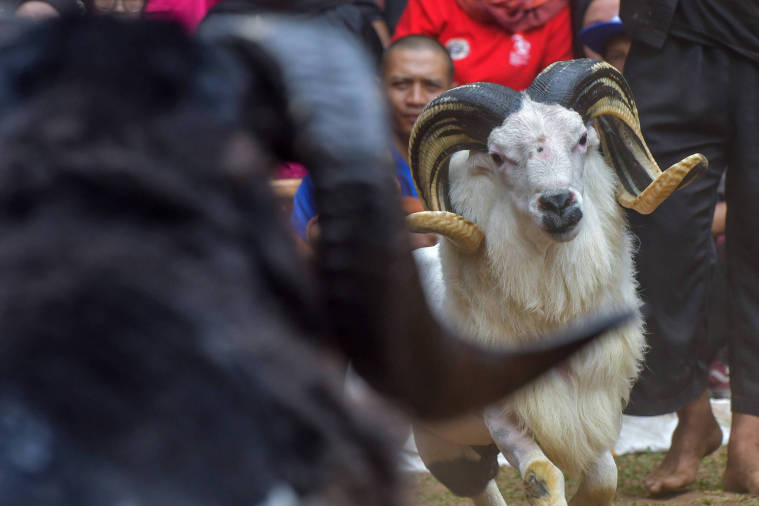
Despite its intensity, ram fighting is not seen locally as a cruel spectacle. Instead, it is a deeply embedded cultural practice. Rams are carefully raised from a young age, with meticulous attention to diet, training, and even coat grooming, skills passed down through families and tied to household honor. Competing is not just about showcasing strength, but about demonstrating the bond built over years between animal and its owner.
Prizes can be generous, ranging from cash to refrigerators, washing machines, or even motorcycles. Yet what truly sustains the tradition is its deeper meaning. Ram fighting serves as a ritual, a way of preserving heritage, and a social bond that strengthens community ties.
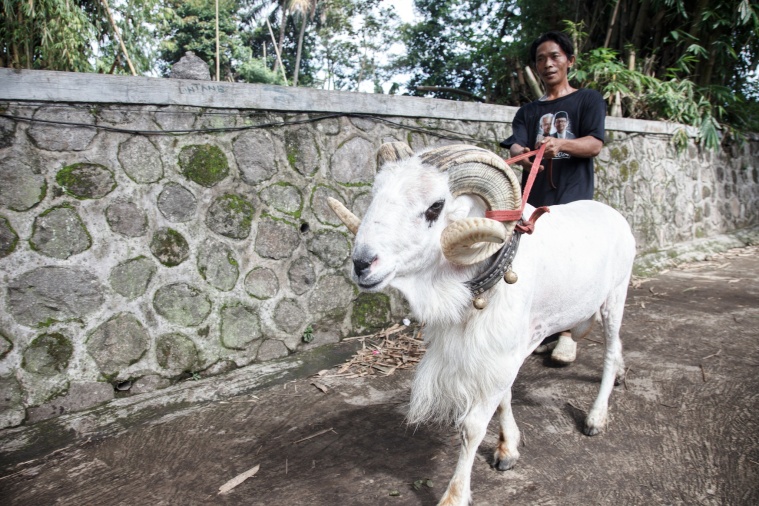
(A villager bringing his ram to take part in the competition)
As rapid urbanization causes many traditional practices in Indonesia to fade, Garut’s ram fighting endures in the countryside. Each clash of horns feels like a conversation with history, reminding people that tradition has not disappeared; it continues to live on in the rhythms of rural life.