Vietnam’s Plastic Waste Boom Leaves Informal Recyclers as the Invisible Backbone
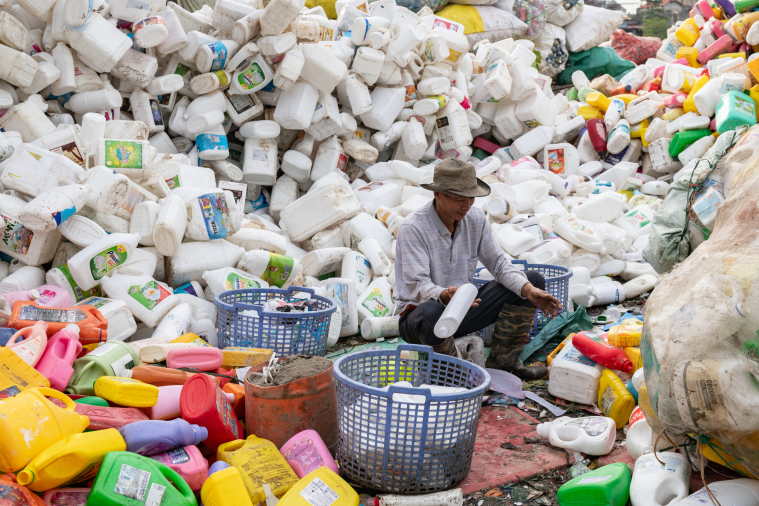
(A worker sorting plastic waste at a recycling workshop on the outskirts of Hanoi)
On the outskirts of Hanoi, a scrap collector unloads a day’s haul of plastic waste, ready to sell it on. These informal recyclers form a long-standing “shadow recycling network” that operates across Vietnam’s cities and countryside.
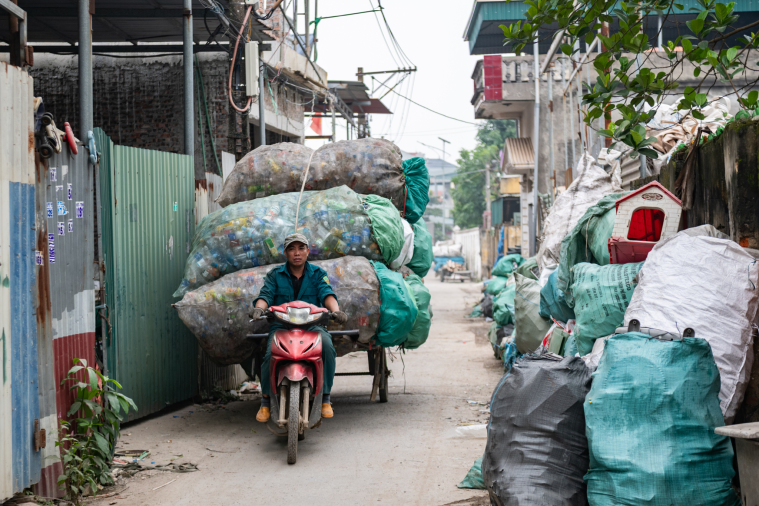
(A man rides a motorbike pulling a cart loaded with sorted plastic)
Moving through neighborhoods, they buy discarded plastic and resell it to aggregators, who then send it to processing sites and into the recycling stream. Though loosely organized, this chain is remarkably efficient and stable, providing livelihoods for tens of thousands of low-income families while playing a crucial role in easing urban waste pressure.
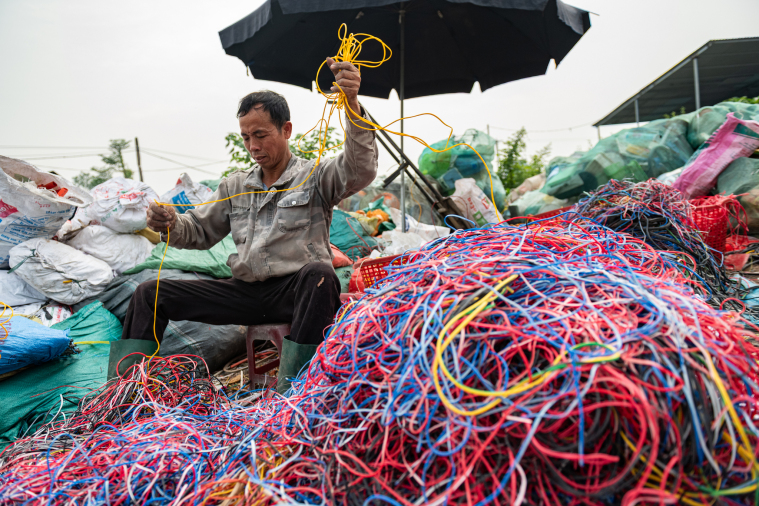
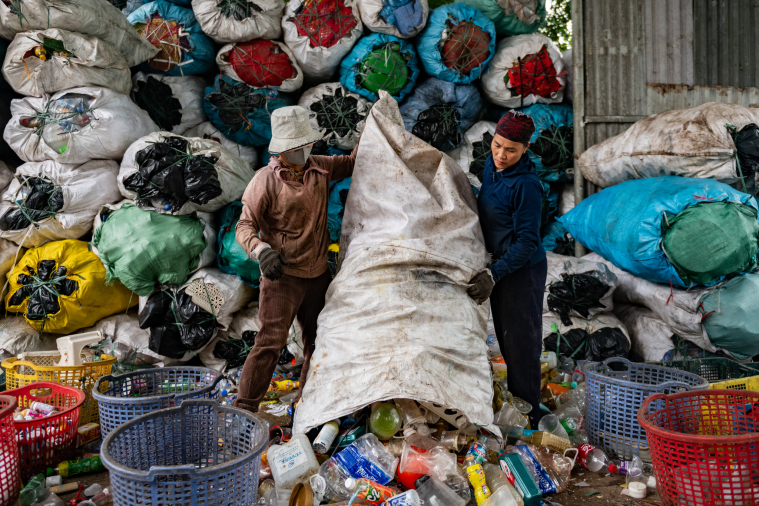
(A worker sorting plastic waste)
Yet the network also brings health and environmental risks. Many plastic workshops are located within residential areas, where dismantling, washing, and melting are often poorly regulated.
The resulting wastewater and emissions quietly affect nearby villages. Despite handling much of the city’s recycling in practice, informal recyclers have long been overlooked in official waste management systems.

(A worker washes shredded plastic at a recycling workshop)
As Vietnam’s economy has grown rapidly in recent years, its already fragile waste infrastructure has come under greater strain.
According to a 2025 environmental report by the World Economic Forum, Vietnam generates nearly 1.8 million tons of plastic waste each year, but only about 27 percent is recycled. This structural gap has made informal recyclers an essential force in mitigating the waste crisis.
Experts argue that Vietnam should better integrate and protect informal recyclers through training, equipment upgrades, and policy support, allowing this vast “invisible workforce” to continue its vital role while operating in a safer and more sustainable framework.