The global oil crisis triggered by the Middle East conflict is sending shockwaves through Southeast Asia.
According to the BusinessMirror in the Philippines, ASEAN economic ministers convened an emergency meeting on March 13 in response to the extreme volatility in international oil prices following the U.S.-Israeli military action against Iran. Philippines Trade Secretary Cristina Aldeguer-Roque, whose country holds the ASEAN chairmanship, stated frankly at the opening that recent geopolitical development “reminds us of our interconnectedness.”
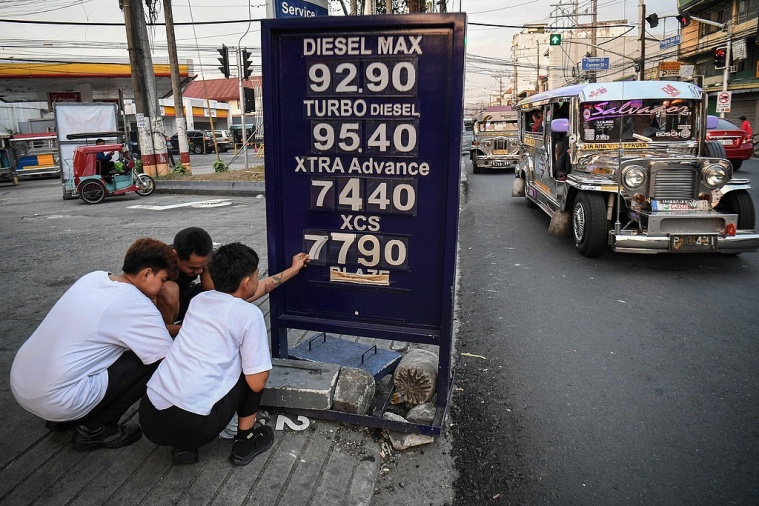
(On March 17, 2026, Asian oil prices rebounded after falling the previous day. The photo shows a worker at a gas station in Manila, the Philippines, replacing a fuel price sign.)
The root of this risk transmission lies in ASEAN’s heavy dependence on Middle Eastern energy. Data from the ASEAN Centre for Energy show that over half of the bloc’s crude oil imports originate from the Middle East. The Philippines relies on the region for 96 to 98 percent of its oil imports, followed by Vietnam (80 to 87 percent), Thailand (56 to 74 percent), and Singapore (50 to 70 percent).
Multiple Measures to Tackle the Crisis
On March 9, the international benchmark oil price surged to $119 per barrel, a near three-and-a-half-year high, sounding economic alarms across several Southeast Asian nations and impacting daily life.
Nikkei Asia reported that oil prices in Vietnam have risen by a cumulative 40 percent since the conflict began, with many gas stations in the capital, Hanoi, posting “sold out” signs. Reuters reported that Vietnam is preparing to cut some flights due to concerns over jet fuel supplies. While Vietnam‘s Ministry of Industry and Trade claimed fuel supplies could last until the end of March, it simultaneously urged the public to switch to electric vehicles. Asset management firm VinaCapital warned that if the conflict persists, Vietnam’s economic growth rate in 2026 could slump by 2 percent.
The Philippines is also facing severe challenges. The peso hit a record low of 59.5 against the US dollar on March 9, leaving the central bank in a difficult position between raising interest rates to curb inflation and supporting economic growth. President Ferdinand Marcos Jr. is considering reducing oil taxes and proposing a four-day work week for government offices to conserve energy.
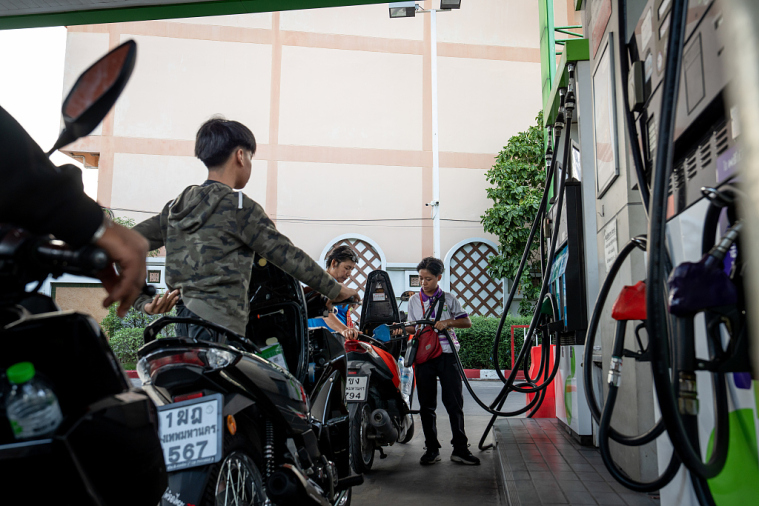
(On March 15, 2026, people in Bangkok, Thailand, queued to refuel their motorcycles.)
The Thai government has announced a complete ban on oil exports and activated the Oil Fuel Fund to subsidize diesel prices for 15 days to stabilize domestic costs. Authorities are also calling for nationwide energy conservation, with government offices leading the way by setting air conditioners to 26-27 C and encouraging businesses to implement work-from-home arrangements.
According to Bloomberg, Indonesian President Prabowo Subianto has stated his commitment to maintaining the budget deficit below the 3 percent threshold and is studying the implementation of a windfall profit tax on commodities to bolster investor confidence. The government is also considering measures like a four-day work week and promoting virtual meetings to save energy.
Energy Strategy Overhaul Imminent
The vulnerability exposed in fossil fuel supply chains is forcing ASEAN member states to revise their energy strategies. Reducing dependence on a single crude oil market and accelerating the transition to new energy sources has become an urgent necessity.
During the March 13 ASEAN Economic Ministers’ Meeting, ministers stressed leveraging internal cooperation frameworks to buffer against shocks and reaffirmed their commitment to advancing the region’s transition to renewable energy.
In October 2025, ASEAN launched the "ASEAN Plan of Action for Energy Cooperation (APAEC)" 2026-2030, setting clear targets for regional energy transition over the next five years. The plan focuses on seven key program areas, including the ASEAN Power Grid, energy efficiency and conservation, renewable energy, and civilian nuclear energy, supported by a "Long-term Roadmap for Renewable Energy" to guide concrete actions.
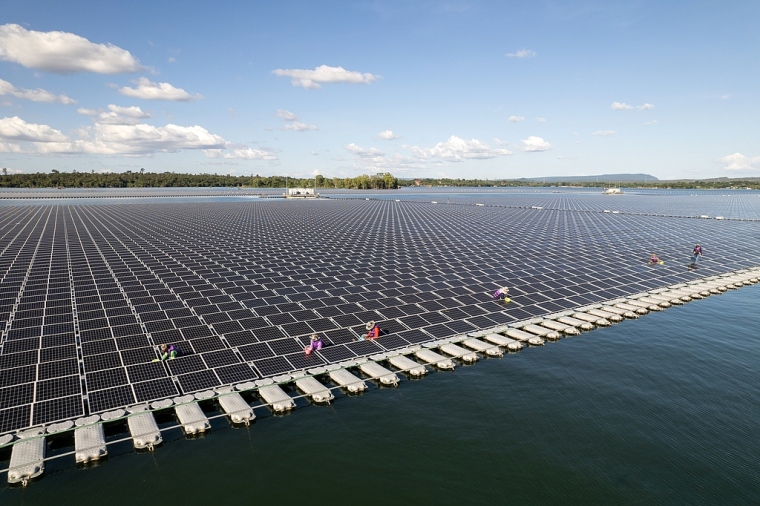
(On November 2, 2021, the floating solar power plant at Sirindhorn Dam—a hydro-solar hybrid project operated by the Electricity Generating Authority of Thailand (EGAT)—in Ubon Ratchathani, Thailand.)
ASEAN members are also developing green energy plans tailored to their respective resource advantages – such as offshore wind in Vietnam, solar photovoltaic (PV) and geothermal in Indonesia, and solar PV and new energy vehicles in Thailand and Malaysia. However, weak infrastructure and technology in the power manufacturing sector are hindering project implementation.
New Energy Cooperation Looks to China
According to a March 16 report on China’s Cooperation with ASEAN in the Power Sector published on China Council for the Promotion of International Trade website, ASEAN is heavily reliant on imported electrical equipment, with China supplying over 60 percent of the market. In Thailand and Vietnam, more than 70 percent of solar PV projects utilize Chinese components.
Xu Ningning, Chairman of the RCEP Industry Cooperation Committee and Executive Chairman of the China-ASEAN Business Council, noted that industrial cooperation between China and ASEAN in the power equipment manufacturing sector is increasingly vibrant, benefiting from strong industrial complementarity, geographic proximity, overlapping policy advantages, and access to international markets.
Several major projects recently finalized underscore the promising prospects for new energy cooperation between China and ASEAN.
In Malaysia, bilateral cooperation has evolved from simple equipment trade to a full-industry-chain model encompassing “equipment trade + engineering construction + investment and operation”. In December 2025, CTG Asia-Africa, Malaysian company Cahya Mata Development Berhad, and China Communications Construction Company (Malaysia) signed a Memorandum of Understanding to advance the development of the Samalaju ground-mounted solar PV project in Sarawak.
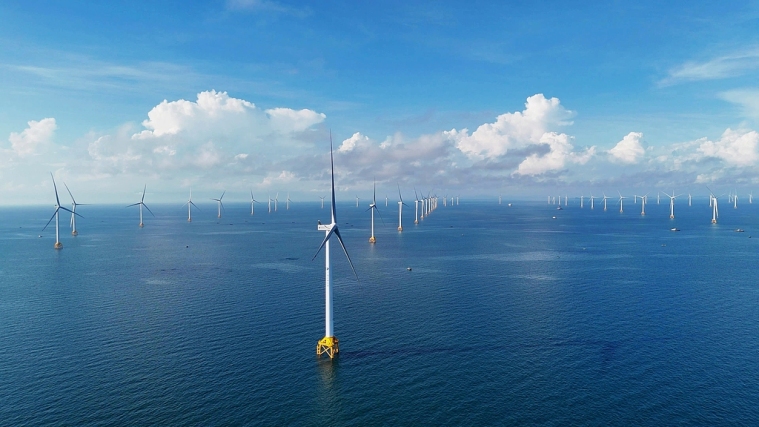
(Guangxi Fangchenggang Offshore Wind Power Demonstration Project)
According to the ASEAN (Bangkok) Wind Energy Expo website, at the end of January 2026, Chinese firm Ming Yang Smart Energy signed strategic agreements with Vietnam’s Xuan Thien Group and PowerChina International to jointly develop a 6 GW China-Vietnam zero-carbon energy project cluster, covering offshore wind, green hydrogen and ammonia, and zero-carbon industrial parks.
Nuki Agya Utama, a former Executive Director of the ASEAN Centre for Energy, previously stated that the pathways taken by countries like China in the clean energy sector can "have a potential impact on solutions adopted in the global south, especially in southeast Asia."
Analysts suggested that with geopolitical risks escalating, the shift to low-carbon and renewable energy systems for Southeast Asian nations seeking energy solutions is, as Utama noted, "a clear imperative rather than an option." China’s comprehensive new energy industrial chain and infrastructure capabilities could provide practical support for accelerating the transformation of ASEAN’s regional energy structure.