A Scholar’s Perspective: Why Has the South China Sea Remained Largely Peaceful and Stable Amid Global Upheaval?
At the South China Sea Sub-forum of the Boao Forum for Asia Annual Conference 2026, discussions with participants on the topic “Rules and Order in the South China Sea: Reflections and Pathways” repeatedly returned to one issue: the situation in the Strait of Hormuz.
Disruptions to shipping there and their ripple effects have inevitably prompted comparisons. As another vital sea lane, what might this mean for the South China Sea?
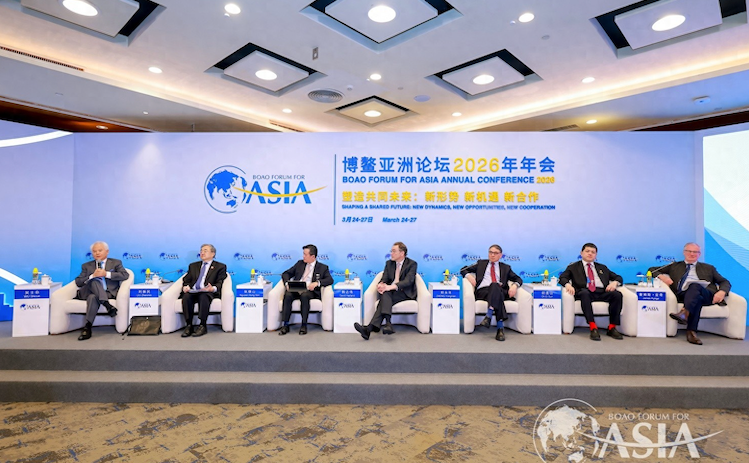
(The South China Sea sub-forum of the Boao Forum for Asia Annual Conference 2026 was held under the theme “Order and Governance Cooperation in the South China Sea Amid Global Changes. /Boao Forum for Asia website)
It is important to recognize that the South China Sea and the Strait of Hormuz are fundamentally different in nature. Navigation in the South China Sea has remained safe and unobstructed for years and has never been materially affected by disputes. That said, changes in the external environment, especially rising concerns over energy security, can indeed have a subtle impact on the willingness of regional countries to cooperate.
On the one hand, higher oil prices may prompt relevant parties to reconsider the value of shelving disputes and pursuing joint development. Recent signals from the Philippines are a case in point and worth watching. On the other hand, such pressures could also encourage some countries to take unilateral actions in disputed waters. Past experience suggests that such moves would inevitably be met with firm responses from China to defend its rights and interests.
These discussions lead to a broader reflection. Peace and stability in the South China Sea have never been a given. They depend not only on a supportive external environment, but also on the continued wisdom and restraint of the countries in the region. From the perspective of an international law scholar, this offers a useful starting point for a few observations and reflections on the issue.
Over the past two decades, what has been the dominant trend in the South China Sea? Conflict and confrontation, or peace and stability? The answer is clearly the latter.
The South China Sea issue dates back to the 1960s and 1970s, involving disputes over islands and reefs as well as maritime delimitation. From the perspective of international law, it is one of the most complex mixed disputes in the world.
Even so, navigation in the South China Sea has remained safe and unobstructed over the decades. China and ASEAN countries have all benefited from its peace and stability, and normal commercial shipping has never been materially affected by these disputes. In recent years, as conflicts have flared up elsewhere, the relative calm of these waters has stood out as all the more valuable.

(China and ASEAN countries held the 25th Senior Officials’ Meeting on the implementation of the Declaration on the Conduct of Parties in the South China Sea in Cebu, the Philippines. /Ministry of Foreign Affairs of China)
Why has this been the case? There are many reasons, but the most important lies in the full, effective implementation of the Declaration on the Conduct of Parties in the South China Sea. When all parties adhere to the Declaration in both letter and spirit, differences and frictions are reduced, and cooperation increases.
Unfortunately, the value of this political document is often underestimated. Much of the attention has been focused on the so-called Code of Conduct in the South China Sea, as if only a legally binding instrument could serve as a cure-all. That, perhaps, reflects a misunderstanding.
Another misconception is that many in the international community, including legal scholars, tend to view the South China Sea issue solely through the lens of the United Nations Convention on the Law of the Sea (UNCLOS). In my view, however, any discussion of international law in this context requires a more comprehensive perspective.
China’s mainland and Taiwan both retain relatively complete historical archives documenting how Japan occupied China’s South China Sea islands during World War II and how the Chinese government recovered them afterward. These records form a fairly clear chain of evidence and point to a fundamental legal issue. The South China Sea question cannot be addressed in isolation from the Cairo Declaration, the Potsdam Proclamation, and the Charter of the United Nations, which underpin the postwar international order. Nor can it be separated from general international law and customary international law governing territorial matters.
As the cornerstone of modern maritime law, the Convention’s authority and universality are beyond question. At the same time, it explicitly recognizes that matters not regulated by the Convention shall continue to be governed by the rules and principles of general international law. This means it would be misguided to invoke the Convention in a way that dismisses the role of general international law in addressing the South China Sea issue. Reducing the issue to a single legal text is neither consistent with legal realities nor helpful in resolving the dispute.
A third misconception concerns the so-called South China Sea arbitration. There is no need here to restate the respective positions of China and the Philippines on the “award,” nor to revisit familiar critiques regarding jurisdiction, legal interpretation, or fact-finding. A more meaningful question is this: from a results-oriented perspective, has the situation in the South China Sea become simpler or more complicated since the ruling? Have tensions between China and the Philippines eased, or intensified?
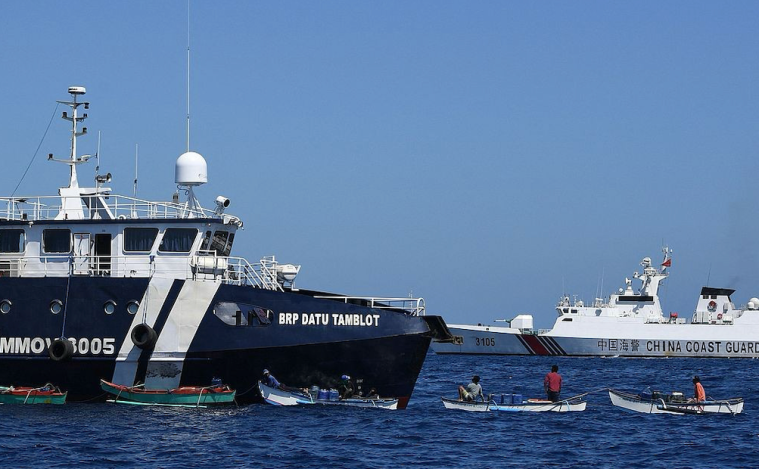
(On February 15, 2024, a Philippine government vessel illegally entered waters adjacent to Huangyan Dao. The China Coast Guard took lawful control measures and expelled it. /CFP)
Objectively speaking, the “award” has added another layer of complexity. Before the arbitration, the issue essentially involved territorial questions and maritime delimitation disputes. Now, an additional point of contention has emerged, namely the legality and validity of the arbitral ruling itself. Equating the South China Sea arbitration with the peaceful settlement of disputes under international law is not helpful for building an international order grounded in law. The purpose of international judicial and arbitral bodies is to resolve disputes and ease tensions. Why has this case failed, and indeed been unable, to achieve that goal? The deeper reasons behind this are well worth careful reflection.
As for the “Code of Conduct,” this represents a crucial opportunity for ASEAN countries, and all parties should maintain realistic expectations.
In essence, the Code is a mechanism for managing differences. Its purpose is to prevent crises from escalating before territorial and maritime delimitation disputes are resolved, and to provide a framework for cooperation in less sensitive areas at sea. Negotiations have recently accelerated, largely because this is a shared priority for both China and ASEAN countries. In past years, some parties sought to insert language related to the South China Sea arbitration award into the Code. It now appears they are moving away from that unrealistic approach, recognizing that if this opportunity is missed, it may not come again. Frankly speaking, if the countries around the South China Sea were dealing not with China but with certain other major powers, the approach and the outcome could be very different.

(On October 28, 2025, in Kuala Lumpur, at the closing ceremony of the 47th Association of Southeast Asian Nations Summit and related meetings, the Philippines assumed the rotating ASEAN chairmanship for 2026.)
At the same time, all parties need both clear expectations and careful preparation. As a continuation and development of the Declaration on the Conduct of Parties in the South China Sea, the Code will certainly play a positive role, but it is not a cure-all. Frictions at sea may still arise in the future, and differences over how to interpret and apply its provisions may also surface.
Even if the Code is not concluded on schedule, there may still be phased progress. As for whether it should be legally binding, China’s position remains open. That question ultimately depends on the consensus of the parties involved. Claims by some international media and scholars that China opposes a binding Code are, in fact, a misunderstanding.
Developments in the Strait of Hormuz serve as a reminder that peace and stability in the South China Sea are the result of years of joint efforts by regional countries. They have not come easily and deserve to be cherished all the more. The profound changes in today’s world are both a warning and an opportunity.
As noted at the forum by Liu Zhenmin, China’s Special Envoy for Climate Change and former UN Under-Secretary-General, it may be a practical path forward to turn external pressures into momentum, accelerate energy transition in East Asia, and build a new energy system that supports regional energy independence and security. At the same time, by working together to establish a security framework covering the South China Sea, and by using mechanisms and dialogue to guide behavior and build trust, countries can truly turn these waters into a sea of peace, friendship, and cooperation.
(Author: Ding Duo, Director of the Research Center for International and Regional Issues, National Institute for South China Sea Studies, and Special Research Fellow at the CMG Expert Committee on South China Sea Studies)