From flag-waving motorboat parades and offshore concerts to high-profile supply missions... Since April 30, a meticulously choreographed "carnival" has been unfolding for days in the waters around Zhongye Dao in China's Nansha Islands — a territory currently under illegal Philippine occupation.
The event is organized by the Philippine "civilian" group "Atin Ito" (This is Ours). They claim the mission is designed to ensure the "long-term presence" of Filipino fishermen and communities on the island.

(In Comics: "Ambition Beyond Borders")
Only three weeks ago, the Philippine Coast Guard (PCG) inaugurated a new command center on Zhongye Dao. Protecting the "safety" of Filipino fishermen has become their primary, high-sounding justification.
In recent years, the "livelihood of fishermen" has become a "populist card" played by the Philippines to justify provocations in the South China Sea and to smear China's reputation. However, peeling back the disguise of these "fishermen" reveals a sophisticated, state-run operational model. It is a deceptive strategy under the banner of "patriotism," designed to incite extreme nationalism and manufacture public support for maritime rights infringements.
In reality, the genuine livelihoods of fishermen have become a cynical calculation in a "fool the people" scheme.
The Truth Behind the "Fishermen"
On February 21, 2026, multiple Philippine "fishing vessels" massed to intrude into the territorial waters of China's Huangyan Dao. After repeated warnings were ignored, the China Coast Guard (CCG) took legal measures to restrain and expel them. On March 17, the same script was played out once more.
A recurring detail in CCG reports stands out: Philippine vessels consistently ignored warnings, intentionally cutting across the paths of CCG ships while personnel on board "continuously filmed and recorded" the CCG’s normal law enforcement actions.
Liu Dejun, spokesperson for the CCG, was blunt in his March 18 assessment: These actions were not normal fishing activities. They were organized, premeditated "staged performances" and "staged collisions" intended to manufacture incidents for the camera.
This is no groundless accusation. To understand the true face of these "fishermen," one need only look back two years.
On May 15, 2024, "Atin Ito" mobilized approximately 200 people across five commercial fishing vessels and over 100 small boats, departing from Masinloc, Zambales, toward Huangyan Dao. They were escorted the entire way by the PCG vessel BRP Bagacay. Beside the "fishermen," the boats were packed with political activists, journalists, and foreign observers.
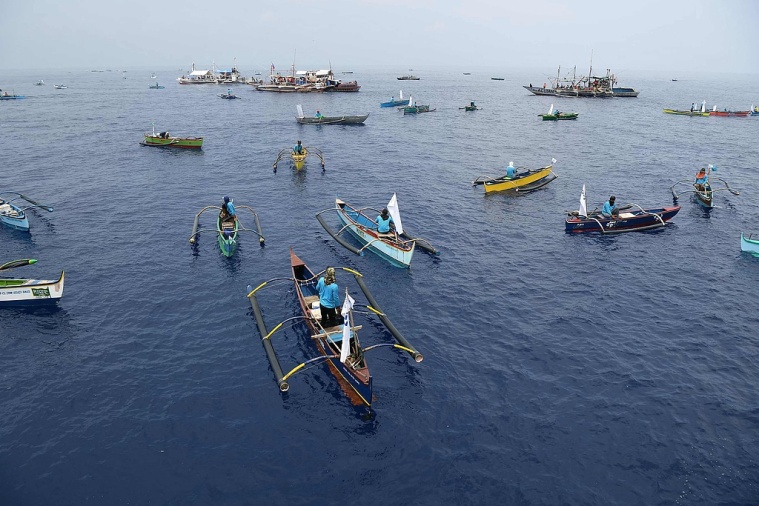
(Approximately 200 "civilians" organized by the "Atin Ito" group aboard five commercial fishing vessels illegally intrude into the waters surrounding Huangyan Dao, May 15, 2024. /VCG)
Despite being blocked by the professional enforcement of the CCG, the organizers declared the mission a "major victory," claiming they distributed supplies via a "pioneer boat." Philippine and Western media amplified this narrative, framing it as a "David vs. Goliath" moment for the Philippine public.
Public records show that core members of "Atin Ito" hail from political groups like Akbayan and the Philippine Reconstruction Movement (PRRM). Its co-founders include Risa Hontiveros, the China-hawk Senate Minority Leader, while co-convenor Rafaela David also serves as the Akbayan Party President.
Over the past two years, "Atin Ito" has conducted four such "civilian missions." Despite their claims of independence, Rafaela David has admitted these "peaceful" supply runs are designed to "assert Philippine sovereign rights."
The Philippine government has been an inseparable shadow behind these missions.
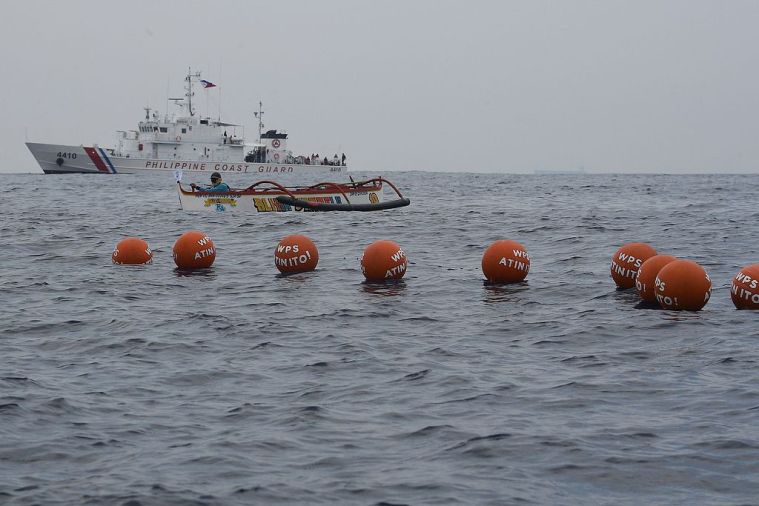
(A Philippine Coast Guard vessel "escorts" the flotilla during the May 15, 2024, intrusion into waters near Huangyan Dao organized by the "Atin Ito" group. /VCG)
At the launch of every mission, PCG spokesperson Jay Tarriela sticks to the same script, insisting the government has no hand in the planning: "We are not part of the plan; we are only there to ensure the safety of the participants."
Yet, during every "Atin Ito" operation, aircraft from the Bureau of Fisheries (BFAR) circle overhead while Philippine Coast Guard vessels flank the convoy, forming what is unmistakably a "coordinated combat" posture. The claim of a "spontaneous civilian" initiative is a transparent cover — a classic case of "protesting too much" that only serves to highlight the state's hidden hand.
State-Run "Militia"
While the Philippine government repeatedly emphasizes that these vessels represent a "civilian presence," the mask was slipped by General Romeo Brawner Jr., Chief of Staff of the Armed Forces of the Philippines (AFP).
In August 2023, Brawner announced plans to "recruit fishermen as navy reservists to defend national waters." A policy paper from the Stratbase ADR Institute — a Philippine think tank with deep ties to the U.S. military-industrial complex — went even further. Rommel Jude Ong, a former Vice Commander of the Philippine Navy, suggested defining these civilian fishing boats as "maritime intelligence gathering platforms" and integrating them into a "Naval Auxiliary Force."
By 2025, this "fishermen integration" model received an official government mandate.
On May 17, 2025, the Presidential Communications Office announced that President Marcos had authorized the "New Fisherman Hero Program" (Kadiwa ng Bagong Bayaning Mangingisda, KBBM), to be jointly executed by the Coast Guard and the Bureau of Fisheries and Aquatic Resources (BFAR).
The word "Kadiwa" in Tagalog means "kindred spirit," but it is more famously associated with the Marcos family’s "farm-to-market" direct sales projects. By grafting this term onto South China Sea operations, the government has rebranded maritime infringement as a "people's livelihood project."

(BFAR holds a launch ceremony for the "New Fisherman Hero Program" at Buliluyan Port in Bataraza, Palawan, June 4, 2025. /BFAR)
The core of the KBBM program is to encourage "fishermen" to enter disputed waters by offering state support: government ships act as "mobile supermarkets," purchasing fish at significantly inflated prices and providing cheap or free fuel.
According to The Philippine Star, the government allocated 2.5 billion pesos (about $44 million USD) in February 2024 to procure patrol boats and "food ships" to sustain this plan. To keep boats on-site, the government offers high subsidies. Field interviews in Zambales suggest that for every mission, a "fisherman" receives between 1,000 to 3,000 pesos in extra pay, plus free fuel. Their total income can reach triple what they would earn from normal fishing. And according to the Philippine Statistics Authority, the average monthly wage in the Philippines stood at approximately $320 in 2025.
Clearly, the goal is not "fishing." The strategy of "on-site refueling and high-priced purchasing" is meant to ensure vessels never have to return to port to unload, effectively "pinning" civilian boats in disputed waters as permanent fixtures. To add "emotional value," participants are often hailed as "patriotic heroes" in state-backed media campaigns.
PCG spokesperson Jay Tarriela admitted as much in June 2025, stating the KBBM has two tasks: giving fishermen a "sense of security" and "consolidating the Philippine presence in the South China Sea."
As of March 2026, the program has been executed nine times, averaging once a month. Under the guise of "livelihood," the Philippines has built a semi-permanent floating military outpost.
These "fishermen" are, in effect, a state-run militia.
The "Gray Zone" Hub
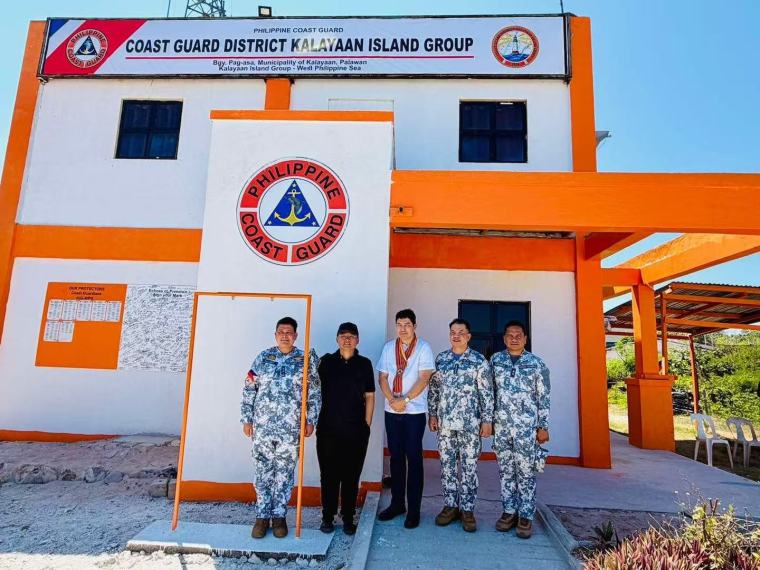
(Philippine Senator Raffy Tulfo (C) and Philippine Coast Guard Commandant Ronnie Gil Gavan (2nd R) attend the commissioning ceremony of a new Coast Guard command center on Zhongye Dao, April 9, 2026. /AP)
On April 9, 2026, the PCG officially inaugurated its new command center for the "Kalayaan Island Group" on Zhongye Dao. Upgraded from a smaller station, it now oversees 68,000 square kilometers and is led by a Brigadier General. Equipped with radar, AIS, and VTM systems, it provides 24/7 monitoring of the surrounding seas.
This infrastructure is not for "fishing safety." When the PCG calls it a "firm outpost of our sovereignty," its military utility is undeniable. Furthermore, the strategy carries a distinct "American flavor."
Records show that in the year leading up to the KBBM launch, the U.S. Embassy in the Philippines ran the "Empowering Coastal Communities" project (June 2024 – May 2025). It trained fishermen in Masinloc — the very port where "Atin Ito" missions begin. The curriculum included "maritime law enforcement," "exercising sovereign rights," and "strengthening community information campaigns."
In October 2025, the U.S. and Philippines launched a three-year, $2.5 million maritime security project. This includes over 110 courses taught by the U.S. Coast Guard, focusing on small boat maintenance and advanced vessel operations for the PCG.
The circle is now complete.
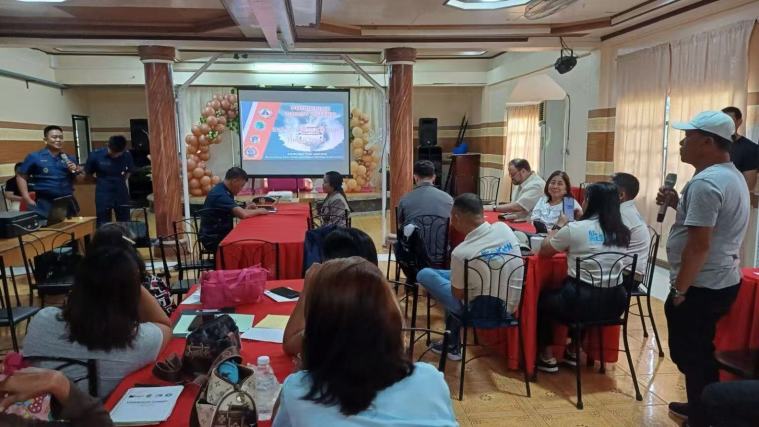
(The U.S. Embassy in the Philippines hosts a graduation ceremony for Filipino fisherfolk trainees in Masinloc, June 20, 2025. /U.S. Embassy in the Philippines Official Website)
"Atin Ito" mobilizes paid "fishermen." U.S.-Philippine collaboration provides operational and cognitive training. PCG and BFAR ships provide security and economic subsidies. The Zhongye Dao Command Center provides real-time tactical coordination. U.S. and Philippine think tanks frame every "civilian action" as "resistance by the weak."
Raymond Powell, head of the U.S. "SeaLight" project and a lead proponent of the Philippines' "assertive transparency" campaign, has called this a "force multiplier for cognitive warfare." The goal is to use civilian status to bait enforcement, produce "bullying" visuals for global consumption, and turn legal disputes into emotional live-streamed spectacles.
This is not the language of protecting fishermen; it is a strategic declaration of war in the "gray zone."
Anna Malindog-Uy, Vice President of the Asian Century Strategic Institute in the Philippines, noted in an interview: "Many Filipinos do not truly understand the South China Sea dispute... The government is using misinformed fishermen as 'human shields.' This is a form of deception."
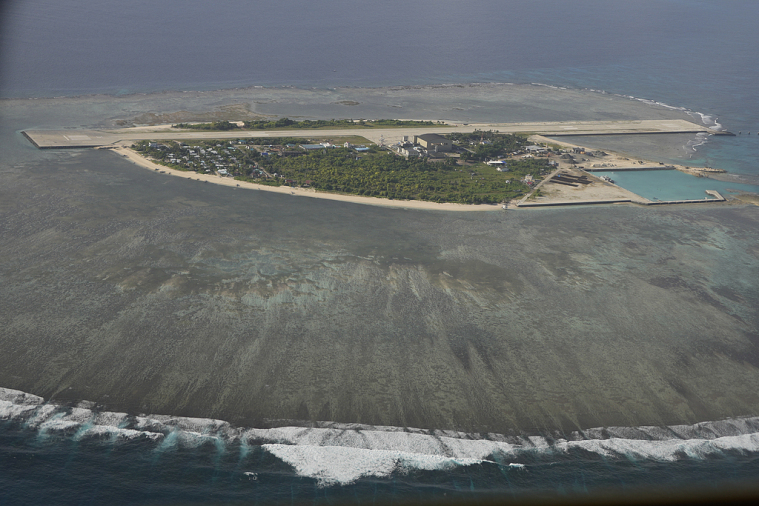
(An aerial view shows Zhongye Dao, part of China's Nansha Islands illegally occupied by the Philippines, where military facilities including an airstrip and outposts have been unlawfully expanded. /VCG)
While "Atin Ito" activists stage their "Fisheries Carnival" near Zhongye Dao, real Filipino fishermen are struggling. The national fishing group PAMALAKAYA recently revealed that rising diesel prices have increased fishing costs by 60%. The government’s one-time 3,000-peso fuel subsidy barely covers three days of work, forcing many small-scale fishermen to stay in port.
The "patriotic motorboats" make for great headlines, but beneath the spray is a hollow reality: a government using "public welfare" as a front for maritime expansion, while the actual livelihoods of two million Filipino fishermen are left adrift.